CASE STUDY 2
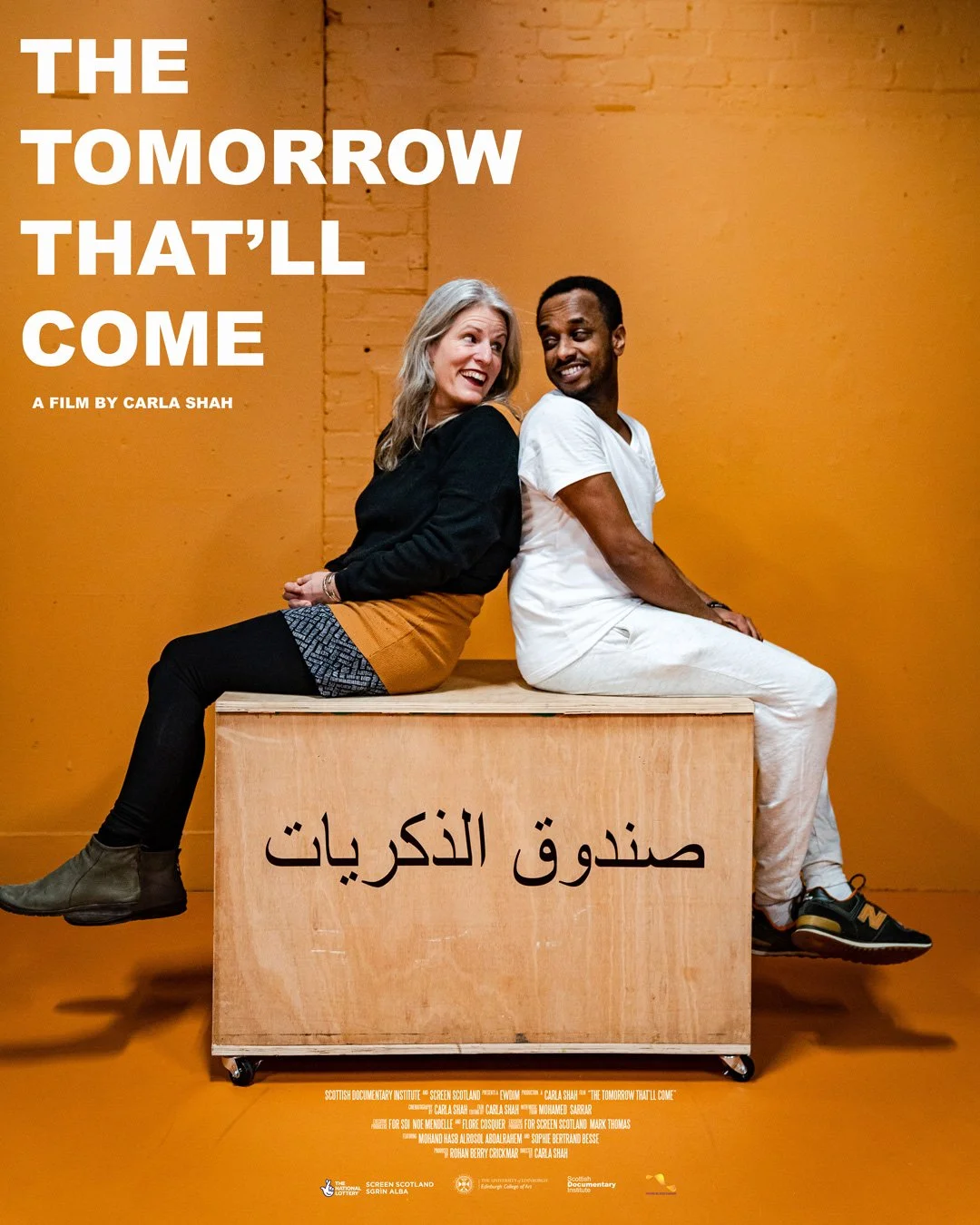
THE TOMORROW THAT’LL COME (2022)
My Role: Director, Editor & Researcher
Producer: Rohan Berry Crickmar
Executive Producers: Noé Mendelle, Flore Cosquer, Mark Thomas
Sound Design: Zoë Irvine
Editorial Consultant: Åsa Mossberg
Production Company: EWDIM (Edinburgh, Scotland)
Format: Creative Short Documentary
Key Funders & Partners: Screen Scotland, Scottish Documentary Institute, PSYCHEdelight
OVERVIEW
In a cultural landscape saturated by reductive headlines and extractive media coverage of displaced people, The Tomorrow That’ll Come was conceived to dismantle conventional tropes. Rather than centering victimhood, bureaucratic barriers, or graphic trauma, the film turns inward to an intimate, everyday sphere: the collaborative bond between Sudanese refugee actor Mohand Hasb Elrosoul and French theatre director Sophie Besse.
As artistic director of London-based theatre company PSYCHEdelight, Sophie previously provided shelter to Mohand when he first arrived in the UK. Over four years, their dynamic evolved from housemates into a deep, familial partnership. When the pair reunites to rehearse their new comedic two-man play, Mohand and Peter (a satirical road trip through Sudan), the film charts their rehearsal process against the backdrop of an increasingly hostile UK legislative environment—exploring what it takes to transform a dream of home into physical reality.
Directorial & Field Methodology
Non-Extractive, Dignified Framing: Rooted in an anthropological methodology, the project rejected sensationalised retellings of displacement. Storytelling boundaries were established transparently with Mohand, creating space to focus on artistic agency, resilience, and personal autonomy.
Observational Intimacy: Filmed without formal sit-down interviews. The camera observes household routines—card games around the dining table, quiet pauses, shared meals—framing these domestic rituals with reverence to expose the nuanced ease of people who consider each other family.
Rehearsal as Dialogue & Therapy: Rehearsal spaces at the Southwark Playhouse were documented with fluid, unobtrusive camera work. Capturing the physical comedy and Arabic clowning between actors Mohand and Peter offered an avenue to reflect Sudan’s complex sociopolitical reality through levity and craft.
Editorial & Technical Craft
Contrasting Rhythms: As both cinematographer and lead editor, Carla balanced the fast, buoyant physical energy of theatre clowning against quiet, lingering domestic observations.
Trauma-Aware Ellipsis: Editorial consultant Åsa Mossberg worked alongside Carla to craft elliptical transitions that honour the characters' emotional states without exploiting their vulnerabilities. The film purposefully avoids manipulative musical cues, using natural diegetic sound and Zoë Irvine’s atmospheric sound design to preserve the space's realism.
Open-Ended Storytelling: The documentary concludes at the threshold of the play's opening night, deliberately closing before the performance begins. This keeps the focus firmly on the off-stage journey of trust, preparation, and healing.
The Impact
Festival Recognition: Debuted at the 75th Edinburgh International Film Festival, subsequently screening internationally at British Shorts Berlin and the Inverness Film Festival.
Advocacy & Public Dialogue: Promoted the core mission of PSYCHEdelight and how collaborative theater offers practical integration, community support, and emotional sanctuary for refugees and host communities alike.
Methodological Precedent: Established Carla’s distinctive filmmaking voice: combining rigorous ethical care with visual warmth, gentle humor, and anthropological precision.